 Truly Italian Roots
The home barista’s guide to single origin, specialty coffee and blends
The home barista’s guide to single origin, specialty coffee and blends
A deep dive
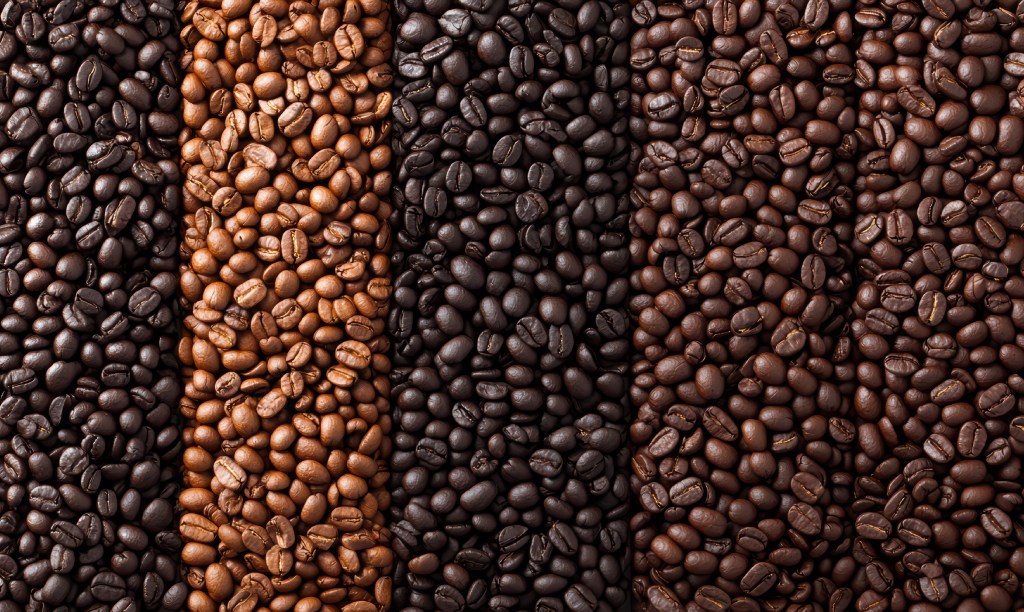
“Single-origin” refers to coffee from a single geographical source. “Origin,” however, can refer to various areas: a nation (e.g., Ethiopia), a region (e.g., Sidamo), a cooperative, a single plantation, or to the so-called micro-lot or nano-lot, often harvested at a specific time of year from a specific botanical variety, perhaps fermented using experimental techniques. Speaking of single-origin, therefore, it evokes what in winemaking is called a terroir, an identity, a signature.
Specialty coffees are a category of single-origin coffees: of the highest quality, they are coffees that, after careful evaluation by experts and rigorous controls, achieved a score above 80 according to the Specialty Coffee Association (SCA) tasting protocol.
A blend, on the other hand, as you might imagine, is the union of multiple origins. There are 100% Arabica blends, and blends that include both Arabica and Robusta. A blend doesn’t necessarily identify an anonymous or industrially produced coffee; on the contrary, it can be artisanal and well-crafted. In some cases, it’s a true work of balance, designed to harmonize strengths or enhance a specific extraction. Often overlooked by those seeking absolute purity, a blend is actually a cornerstone of Italian tradition.
Tasting differences
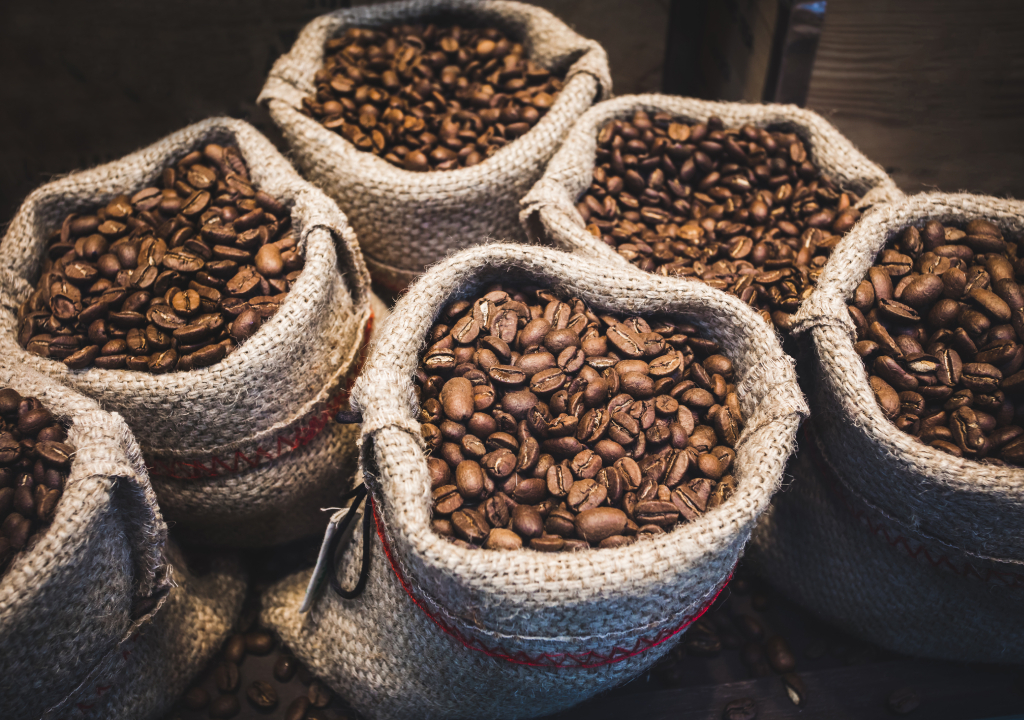
A single-origin coffee can be challenging, floral, pungent, complex, edgy, and more. It can fascinate or disorient, but it rarely leaves anyone indifferent. Single-origin coffee is perfect for the home barista who loves to study, explore, and challenge themselves with precise extractions beyond espresso, targeted profiling, and subtle variations.
A blend, on the other hand, seeks and offers greater balance. The roaster combines different origins to create a specific flavor profile, typically resulting in a more accessible and standardized product, which guarantees a certain consistency in flavor. It’s like an orchestra’s symphony, in which each origin plays its part.
From wine to coffee: the influence of the “terroir”
Talking about single-origins leads to talking about terroir and all its peculiarities and uniqueness.
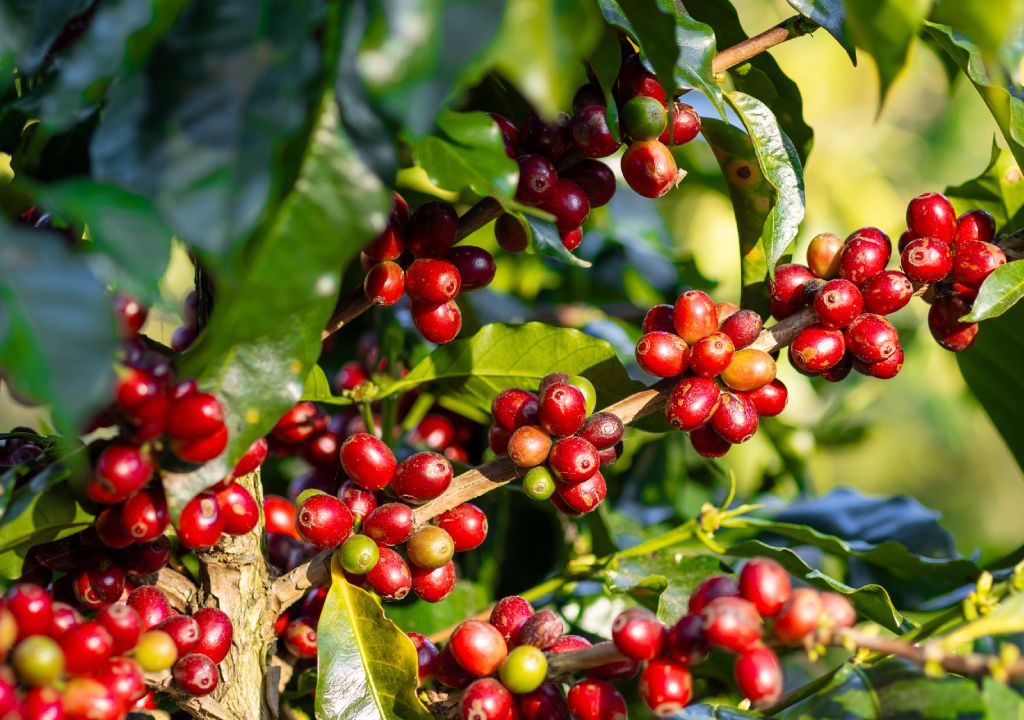
Humidity, altitude, latitude, soil type, botanical variety, post-harvest processes: everything profoundly impacts the result we taste in the cup. A natural Ethiopian coffee from Yirgacheffe might offer notes of peach, jasmine, and black tea. A washed Kenyan coffee from Nyeri might offer notes of currant, pink grapefruit, and a bright acidity reminiscent of red wine. Choosing a single-origin coffee is an act of radical transparency: nothing is masked.
In a blend, however, the strength lies in the construction: it’s all about the dosage, the post-roasting, and the balancing of the thermal curves to create uniformity or differentiation. The roaster becomes a composer. The ultimate goal can be replicability or emotion. It depends on the creator and the final consumer: there are more complex blends and simpler blends to suit all palates.
Espresso and filter coffee
In Italy, traditional blends – whether they are 100% Arabica or a combination Arabica and Robusta – have always been preferred, because the espresso needs to be intense and concentrated, and a soft and rich taste, plus a layer of crema are key elements for the consumer. Here, blend found its highest expression: it is crafted to handle the high pressure of the machines, and to offer body, persistence, and balance in taste.
On the contrary, for filter coffee, single origins are the ones to prefer. They are more diluted and the temperature and the pace of extraction are lower, so also the most volatile aromatic notes can stand out sharply. In what we can almost define as a “coffee infusion”, it is easier to enjoy the different flavor nuances, the elegant acidity, the fruity or floral notes. Despite that, today, we can extract an espresso from a single origin too. In this case, every detail of the preparation process becomes even more relevant.
Curiosities and myth-busting
Does a single origin coffee always have a better quality than a blend? Usually yes, but a wrongly roasted single origin can be worse than a quality blend. While, for specialty coffees, quality is objective, as it has been proven and confirmed by recognized tests.
Does the term “blend” identify only industrial products? Absolutely not. Blends can be of many kinds, from supermarket products – which can be really nice and well designed too – to blends made by artisanal quality roasters that craft limited edition coffees, thought to express a specific sensorial signature.
Is specialty coffee always…acid? First of all, let’s distinguish what can be acid to our palate from the acidity we can perceive in our stomach!
Often, Specialty coffee seem to be more acid to our taste buds, compared to a classic Italian espresso. This is because Specialty coffees are usually light roasted, and the chlorogenic acid, a polyphenol which is naturally contained in coffee, results in being more present.
It is very important to consider the origin of coffee too. For example, coffees that grow at a higher altitude – as the African ones – have a higher cellular density and so, as a consequence, more cells and spaces for the chlorogenic acid to form, and more information that then contribute to the organoleptic profile. It is for this reason that Specialty coffees are usually defined as “complex”. Also, another factor is the treatment of the raw material: a washed coffee, compared to a natural one, could be more acid. And even the grinding covers an important role as it can balance or enrich the flavor profile of a product.
If coffee seems to be too bitter in your mouth, and it causes heartburn, the reason why could be – apart from a bad blend or a badly maintained machine – a very dark roast. In fact, a dark roast could burn coffee, and create a final product that is bitter, non beneficial, and difficult to digest. Let’s not forget the ability of the barista. Sometimes, when we drink bitter and burnt coffees, it could be because of an over-extraction: too fast, and wrong.
Ethically
Single-origin coffee often brings another important dimension to blends: traceability and sustainability. Knowing where the coffee comes from, who grew it, under what conditions, and how it was treated paves the way for more informed consumption. Certifications, direct trade, and supply chain transparency are increasingly important to many sophisticated home baristas. However, there are modern blends that adopt a similar approach, crafting the blend with attention to ethical, certified, or directly sourced origins.
The perfect coffee for Gaggia machines
With a manual Gaggia machine, the home barista has control over everything: grinding, dosing, tamping, and brewing. This level of personalization is great when using a coffee blend, but also to make the most of a single origin or a nice specialty coffee.
For example, with a machine like the Gaggia Classic GT, it is possible to modify the pre-infusion – automatic or manual – and to adjust the pressure thanks to the OPV, so you can tailor your experience to your needs, and to the characteristics of the coffee beans you are using.
A single-origin could be extracted also with a Gaggia fully auto machine. In this case, it is important to calibrate the grinding level for a better extraction, and it is possible to choose the preferred selection of aroma (that is the ground coffee per cup), depending on the type of coffee, its organoleptic profile, its origin.
An aware approach
We have a rich history behind us, and thanks to the support of our community of partners and coffee lovers, we feel responsible for spreading a mindful approach to coffee. Choosing the right blend or the perfect single-origin coffee is an integral part of this culture: it means exploring, testing, learning, and building your own personal taste.
On our blog, on our social media profiles, and through our community of home baristas, we strive to encourage a mindful approach to the daily cup. With your Gaggia, you can do much more than just “make a coffee”: you can create, discover, and taste.
Whatever your choice, a Gaggia machine can be the right tool for bringing the best to your cup. With the right attention, even a blend can surprise you with unexpected nuances. And, with care and experimentation, a single-origin and specialty coffees can reveal all their wonderful complexity.
Our advice? Try! Change. Observe. Taste. Take note. And let yourself be guided by the pleasure of a coffee that never stops at the cup alone, but opens a window to the world. And your Gaggia machine, on this journey of the senses, can act as a bridge.